
call_end

    • Pl chevron_right

      Sebastian Wick: How Hard Is It To Open a File?

      news.movim.eu / PlanetGnome • 23 April 2026 • 10 minutes

    It’s a question I had to ask myself multiple times over the last few months. Depending on the context the answer can be:

    • very simple, just call the standard library function
    • extremely hard, don’t trust anything

    If you are an app developer, you’re lucky and it’s almost always the first answer. If you develop something with a security boundary which involves files in any way, the correct answer is very likely the second one.

    Opening a File, the Hard Way

    Like so often, the details depend on the specifics, but in the worst-case scenario, there is a process on either side of the security boundary, which operate on a filesystem tree which is shared by both processes.

    Let’s say that the process with more privileges operates on a file on behalf of the process with less privileges. You might want to restrict this to files in a certain directory, to prevent the less privileged process from, for example, stealing your SSH key, and thus take a subpath that is relative to that directory.

    The first obvious problem is that the subpath can refer to files outside of the directory if it contains .. . If the privileged process gets called with a subpath of ../.ssh/id_ed25519 , you are in trouble. Easy fix: normalize the path, and if we ever go outside of the directory, fail.

    The next issue is that every component of the path might be a symlink. If the privileged process gets called with a subpath of link , and link is a symlink to ../.ssh/id_ed25519 , you might be in trouble. If the process with less privileges cannot create files in that part of the tree, it cannot create a malicious symlink, and everything is fine. In all other scenarios, nothing is fine. Easy fix: resolve the symlinks, expand the path, then normalize it.

    This is usually where most people think we’re done, opening a file is not that hard after all, we can all do more fun things now. Really, this is where the fun begins.

    The fix above works, as long as the less privileged process cannot change the file system tree anywhere in the file’s path while the more privileged process tries to access it. Usually this is the case if you unpack an attacker-provided archive into a directory the attacker does not have access to. If it can however, we have a classic TOCTOU (time-of-check to time-of-use) race.

    We have the path foo/id_ed25519 , we resolve the smlinks, we expand the path, we normalize it, and while we did all of that, the other process just replaced the regular directory foo that we just checked with a symlink which points to ../.ssh . We just checked that the path resolves to a path inside the target directory though, and happily open the path foo/id_ed25519 which now points to your ssh key. Not an easy fix.

    So, what is the fundamental issue here? A path string like /home/user/.local/share/flatpak/app/org.example.App/deploy describes a location in a filesystem namespace. It is not a reference to a file. By the time you finish speaking the path aloud, the thing it names may have changed.

    The safe primitive is the file descriptor. Once you have an fd pointing at an inode, the kernel pins that inode. The directory can be unlinked, renamed, or replaced with a symlink; the fd does not care. A common misconception is that file descriptors represent open files. It is true that they can do that, but fds opened with O_PATH do not require opening the file, but still provide a stable reference to an inode.

    The lesson that should be learned here is that you should not call any privileged process with a path. Period. Passing in file descriptors also has the benefit that they serve as proof that the calling process actually has access to the resource.

    Another important lesson is that dropping down from a file descriptor to a path makes everything racy again. For example, let’s say that we want to bind mount something based on a file descriptor, and we only have the traditional mount API, so we convert the fd to a path, and pass that to mount. Unfortunately for the user, the kernel resolves the symlinks in the path that an attacker might have managed to place there. Sometimes it’s possible to detect the issue after the fact, for example by checking that the inode and device of the mounted file and the file descriptor match.

    With that being said, sometimes it is not entirely avoidable to use paths, so let’s also look into that as well!

    In the scenario above, we have a directory in which we want all the paths to resolve in, and that the attacker does not control. We can thus open it with O_PATH and get a file descriptor for it without the attacker being able to redirect it somewhere else.

    With the openat syscall, we can open a path relative to the fd we just opened. It has all the same issues we discussed above, except that we can also pass O_NOFOLLOW . With that flag set, if the last segment of the path is a symlink, it does not follow it and instead opens the actual symlink inode. All the other components can still be symlinks, and they still will be followed. We can however just split up the path, and open the next file descriptor for the next path segment and resolve symlinks manually until we have done so for the entire path.

    libglnx chase

    libglnx is a utility library for GNOME C projects that provides fd-based filesystem operations as its primary API. Functions like glnx_openat_rdonly , glnx_file_replace_contents_at , and glnx_tmpfile_link_at all take directory fds and operate relative to them. The library is built around the discipline of “always have an fd, never use an absolute path when you can use an fd.”

    The most recent addition is glnx_chaseat , which provides safe path traversal, and was inspired by systemd’s chase() , and does precisely what was described above.

    int glnx_chaseat (int              dirfd,
                      const char      *path,
                      GlnxChaseFlags   flags,
                      GError         **error);
    

    It returns an O_PATH | O_CLOEXEC fd for the resolved path, or -1 on error. The real magic is in the flags:

    typedef enum _GlnxChaseFlags {
      /* Default */
      GLNX_CHASE_DEFAULT = 0,
      /* Disable triggering of automounts */
      GLNX_CHASE_NO_AUTOMOUNT = 1 << 1,
      /* Do not follow the path's right-most component. When the path's right-most
       * component refers to symlink, return O_PATH fd of the symlink. */
      GLNX_CHASE_NOFOLLOW = 1 << 2,
      /* Do not permit the path resolution to succeed if any component of the
       * resolution is not a descendant of the directory indicated by dirfd. */
      GLNX_CHASE_RESOLVE_BENEATH = 1 << 3,
      /* Symlinks are resolved relative to the given dirfd instead of root. */
      GLNX_CHASE_RESOLVE_IN_ROOT = 1 << 4,
      /* Fail if any symlink is encountered. */
      GLNX_CHASE_RESOLVE_NO_SYMLINKS = 1 << 5,
      /* Fail if the path's right-most component is not a regular file */
      GLNX_CHASE_MUST_BE_REGULAR = 1 << 6,
      /* Fail if the path's right-most component is not a directory */
      GLNX_CHASE_MUST_BE_DIRECTORY = 1 << 7,
      /* Fail if the path's right-most component is not a socket */
      GLNX_CHASE_MUST_BE_SOCKET = 1 << 8,
    } GlnxChaseFlags;
    

    While it doesn’t sound too complicated to implement, a lot of details are quite hairy. The implementation uses openat2 , open_tree and openat depending on what is available and what behavior was requested, it handles auto-mount behavior, ensures that previously visited paths have not changed, and a few other things.

    An Aside on Standard Libraries

    The POSIX APIs are not great at dealing with the issue. The GLib/Gio APIs ( GFile , etc.) are even worse and only accept paths. Granted, they also serve as a cross-platform abstraction where file descriptors are not a universal concept. Unfortunately, Rust also has this cross-platform abstraction which is based entirely on paths.

    If you use any of those APIs, you very likely created a vulnerability. The deeper issue is that those path-based APIs are often the standard way to interact with files. This makes it impossible to reason about the security of composed code. You can audit your own code meticulously, open everything with O_PATH | O_NOFOLLOW , chain *at() calls carefully — and then call a third-party library that calls open(path) internally. The security property you established in your code does not compose through that library call.

    This means that any system-level code that cares about filesystem security has to audit all transitive dependencies or avoid them in the first place.

    So what would a better GLib cross-platform API look like? I would say not too different from chaseat() , but returning opaque handles instead of file descriptors, which on Unix would carry the O_PATH file descriptor and a path that can be used for printing, debugging and things like that. You would open files from those handles, which would yield another kind of opaque handle for reading, writing, and so on.

    The current GFile was also designed to implement GVfs: g_file_new_for_uri("smb://server/share/file") gives you a GFile you can g_file_read() just like a local file. This is the right goal, but the wrong abstraction layer. Instead, this kind of access should be provided by FUSE, and the URI should be translated to a path on a specific FUSE mount. This would provide a few benefits:

    • The fd-chasing approach works everywhere because it is a real filesystem managed by the kernel
    • The filesystem becomes independent of GLib and can be used for example from Rust as well
    • It stacks with other FUSE filesystems, such as the XDG Desktop Document Portal used by Flatpak

    Wait, Why Are You Talking About This?

    Nowadays I maintain a small project called Flatpak. Codean Labs recently did a security analysis on it and found a number of issues. Even though Flatpak developers were aware of the dangers of filesystems, and created libglnx because of it, most of the discovered issues were just about that. One of them ( CVE-2026-34078 ) was a complete sandbox escape.

    flatpak run was designed as a command-line tool for trusted users. When you type flatpak run org.example.App , you control the arguments. The code that processes the arguments was written assuming the caller is legitimate. It accepted path strings, because that’s what command-line tools accept.

    The Flatpak portal was then built as a D-Bus service that sandboxed apps could call to start subsandboxes — and it did this by effectively constructing a flatpak run invocation and executing it. This connected a component designed for trusted input directly to an untrusted caller (the sandboxed app).

    Once that connection exists, every assumption baked into flatpak run about caller trustworthiness becomes a potential vulnerability. The fix wasn’t “change one function” — it was “audit the entire call chain from portal request to bubblewrap execution and replace every path string with an fd.” That’s commits touching the portal, flatpak-run , flatpak_run_app , flatpak_run_setup_base_argv , and the bwrap argument construction, plus new options ( --app-fd , --usr-fd , --bind-fd , --ro-bind-fd ) threaded through all of them.

    If the GLib standard file and path APIs were secure, we would not have had this issue.

    Another annoyance here is that the entire subsandboxing approach in Flatpak comes from 15 years ago, when unprivileged user namespaces were not common. Nowadays we could (and should) let apps use kernel-native unprivileged user namespaces to create their own subsandboxes.

    Unfortunately with rather large changes comes a high likelihood of something going wrong. For a few days we scrambled to fix a few regressions that prevented Steam, WebKit, and Chromium-based apps from launching. Huge thanks to Simon McVittie!

    In the end, we managed to fix everything, made Flatpak more secure, the ecosystem is now better equipped to handle this class of issues, and hopefully you learned something as well.
    • Pl chevron_right

      Michael Meeks: 2026-04-22 Wednesday

      news.movim.eu / PlanetGnome • 22 April 2026

    • Up early, mail chew, out to a Domino Workspace talk, then a Linux Desktop (instead of Windows 11) talk - encouraging to see interest in FLOSS desktops return.
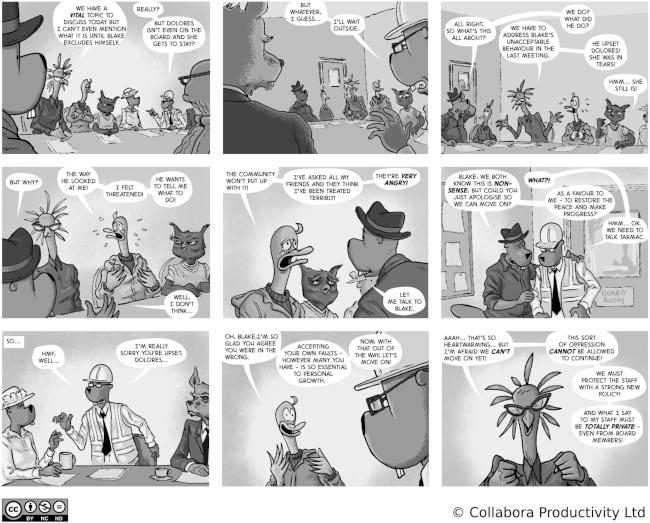
    • Published the next strip: Code of conduct - "loosing the peace"
    • Lunch; back to the hotel for a brief Quarterly Mgmt meeting, and a rest. Speakers dinner in the evening, great to meet up & go deeper over a meal on where the technology is used. Bed late.
    • Pl chevron_right

      Michael Meeks: 2026-04-21 Tuesday

      news.movim.eu / PlanetGnome • 21 April 2026

    • Up early, off to HCL Engage in a football stadium for Richard's keynote, Jason's flashy Domino / AI demo, product management bits, and of course Collabora Online integration announced.
    • Gave talk on COOL, handed out huge numbers of beavers, quick-start guides, stickers and more. Great to talk to lots of excited people engaged with Sovereign alternatives.
    • Dinner in the evening, met more interesting people.
    • Pl chevron_right

      Jussi Pakkanen: CapyPDF is approaching feature sufficiency

      news.movim.eu / PlanetGnome • 21 April 2026 • 1 minute

    In the past I have written many blog posts on implementing various PDF features in CapyPDF . Typically they explain the feature being implemented, how confusing the documentation is, what perverse undocumented quirks one has to work around to get things working and so on. To save the effort of me writing and you reading yet another post of the same type, let me just say that you can now use CapyPDF to generate PDF forms that have widgets like text fields and radio buttons.

    What makes this post special is that forms and widget annotations were pretty much the last major missing PDF feature Does that mean that it supports everything? No. Of course not. There is a whole bunch of subtlety to consider. Let's start with the fact that the PDF spec is massive , close to 1000 pages. Among its pages are features that are either not used or have been replaced by other features and deprecated.

    The implementation principle of CapyPDF thus far has been "implement everything that needs special tracking, but only to the minimal level needed". This seems complicated but is in fact quite simple. As an example the PDF spec defines over 20 different kinds of annotations. Specifying them requires tracking each one and writing out appropriate entries in the document metadata structures. However once you have implemented that for one annotation type, the same code will work for all annotation types. Thus CapyPDF has only implemented a few of the most common annotations and the rest can be added later when someone actually needs them.

    Many objects have lots of configuration options which are defined by adding keys and values to existing dictionaries. Again, only the most common ones are implemented, the rest are mostly a matter of adding functions to set those keys. There is no cross-referencing code that needs to be updated or so on. If nobody ever needs to specify the color with which a trim box should be drawn in a prepress preview application, there's no point in spending effort to make it happen.

    The API should be mostly done, especially for drawing operations. The API for widgets probably needs to change. Especially since form submission actions are not done. I don't know if anything actually uses those, though. That work can be done based on user feedback.

    • Pl chevron_right

      Thibault Martin: TIL that Minikube mounts volumes as root

      news.movim.eu / PlanetGnome • 21 April 2026 • 1 minute

    When I have to play with a container image I have never met before, I like to deploy it on a test cluster to poke and prod it. I usually did that on a k3s cluster, but recently I've moved to Minikube to bring my test cluster with me when I'm on the go.

    Minikube is a tiny one-node Kubernetes cluster meant to run on development machines. It's useful to test Deployments or StatefulSets with images you are not familiar with and build proper helm charts from them.

    It provides volumes of the hostPath type by default. The major caveat of hostPath volumes is that they're mounted as root by default .

    I usually handle mismatched ownership with a securityContext like the following to instruct the container to run with a specific UID and GID, and to make the volume owned by a specific group.

    Typically in a StatefulSet it looks like this:

    apiVersion: apps/v1
    kind: StatefulSet
    metadata:
      name: myapp
    # [...]
    spec:
    # [...]
      template:
    # [...]
        spec:
          securityContext:
            runAsUser: 10001
            runAsGroup: 10001
            fsGroup: 10001
          containers:
            - name: myapp
              volumeMounts:
                - name: data
                  mountPath: /data
      volumeClaimTemplates:
        - metadata:
            name: data
          spec:
    # [...]
    

    In this configuration:

    • Processes in the Pod myapp will run with UID 10001 and GID 10001.
    • The /data directory mounted from the data volume will belong to group 10001 as well.

    The securityContext usually solves the problem, but that's not how hostPath works. For hostPath volumes, the securityContext.fsGroup property is silently ignored.

    [!success] Init Container to the Rescue!

    The solution in this specific case is to use an initContainer as root to chown the volume mounts to the unprivileged user.

    In practice it will look like this.

    apiVersion: apps/v1
    kind: StatefulSet
    metadata:
      name: myapp
    # [...]
    spec:
    # [...]
      template:
    # [...]
        spec:
          securityContext:
            runAsUser: 10001
            runAsGroup: 10001
            fsGroup: 10001
          initContainers:
            - name: fix-perms
              image: busybox
              command:
                ["sh", "-c", "chown -R 10001:10001 /data"]
              securityContext:
                runAsUser: 0
              volumeMounts:
                - name: data
                  mountPath: /data
          containers:
            - name: myapp
              volumeMounts:
                - name: data
                  mountPath: /data
      volumeClaimTemplates:
        - metadata:
            name: data
          spec:
    # [...]
    

    It took me a little while to figure it out, because I was used to testing my StatefulSets on k3s. K3s uses a local path provisioner, which gives me local volumes, not hostPath ones like Minikube.

    In production I don't need the initContainer to fix permissions since I'm deploying this on an EKS cluster.

    • Pl chevron_right

      Andy Wingo: on hayek's bastards

      news.movim.eu / PlanetGnome • 20 April 2026 • 6 minutes

    After wrapping up a four-part series on free trade and the left , I thought I was done with neoliberalism. I had come to the conclusion that neoliberals were simply not serious people: instead of placing value in literally any human concern, they value only a network of trade, and as such, cannot say anything of value. They should be ignored in public debate; we can find economists elsewhere.

    I based this conclusion partly on Quinn Slobodian’s Globalists (2020), which describes Friedrich Hayek’s fascination with cybernetics in the latter part of his life. But Hayek himself died before the birth of the WTO, NAFTA, all the institutions “we” fought in Seattle; we fought his ghost, living on past its time.

    Well, like I say, I thought I was done, but then a copy of Slobodian’s Hayek’s Bastards (2025) arrived in the post. The book contests the narrative that the right-wing “populism” that we have seen in the last couple decades is an exogenous reaction to elite technocratic management under high neoliberalism, and that actually it proceeds from a faction of the neoliberal project. It’s easy to infer a connection when we look at, say, Javier Milei ‘s background and cohort, but Slobodian delicately unpicks the weft to expose the tensile fibers linking the core neoliberal institutions to the alt-right. Tonight’s note is a book review of sorts.

    after hayek

    Let’s back up a bit. Slobodian’s argument in Globalists was that neoliberalism is not really about laissez-faire as such: it is a project to design institutions of international law to encase the world economy, to protect it from state power (democratic or otherwise) in any given country. It is paradoxical, because such an encasement requires state power, but it is what it is.

    Hayek’s Bastards is also about encasement, but instead of protection from the state, the economy was to be protected from debasement by the unworthy. (Also there is a chapter on goldbugs, but that’s not what I want to talk about.)

    The book identifies two major crises that push a faction of neoliberals to ally themselves with a culturally reactionary political program. The first is the civil rights movement of the 1960s and 1970s, together with decolonization. To put it crudely, whereas before, neoliberal economists could see themselves as acting in everyone’s best interest, having more black people in the polity made some of these white economists feel like their project was being perverted.

    Faced with this “crisis”, at first the reactionary neoliberals reached out to race: the infant post-colonial nations were unfit to participate in the market because their peoples lacked the cultural advancement of the West. Already Globalists traced a line through Wilhelm Röpke ‘s full-throated defense of apartheid, but the subjects of Hayek’s Bastards ( Lew Rockwell , Charles Murray , Murray Rothbard , et al) were more subtle: instead of directly stating that black people were unfit to govern, Murray et al argued that intelligence was the most important quality in a country’s elite. It just so happened that they also argued, clothed in the language of evolutionary psychology and genetics, that black people are less intelligent than white people, and so it is natural that they not occupy these elite roles, that they be marginalized.

    Before proceeding, three parentheses:

    1. Some words have a taste. Miscegenation tastes like the juice at the bottom of a garbage bag left out in the sun: to racists, because of the visceral horror they feel at the touch of the other, and to the rest of us, because of the revulsion the very idea provokes.

    2. I harbor an enmity to Silvia Plath because of The Bell Curve . She bears no responsibility; her book was The Bell Jar . I know this in my head but my heart will not listen.

    3. I do not remember the context, but I remember a professor in university telling me that the notion of “race” is a social construction without biological basis; it was an offhand remark that was new to me then, and one that I still believe now. Let’s make sure the kids now hear the good word now too; stories don’t tell themselves.

    The second crisis of neoliberalism was the fall of the Berlin Wall: some wondered if the negative program of deregulation and removal of state intervention was missing a positive putty with which to re-encase the market. It’s easy to stand up on a stage with a chainsaw, but without a constructive program, neoliberal wins in one administration are fragile in the next.

    The reactionary faction of neoliberalism’s turn to “family values” responds to this objective need, and dovetails with the reaction to the civil rights movement: to protect the market from the unworthy, neo-reactionaries worked to re-orient the discourse, and then state policy, away from “equality” and the idea that idea that We Should Improve Society, Somewhat . Moldbug’s neofeudalism is an excessive rhetorical joust, but one that has successfully moved the window of acceptable opinions. The “populism” of the AfD or the recent Alex Karp drivel is not a reaction, then, to neoliberalism, but a reaction by a faction of neoliberals to the void left after communism. (And when you get down to it, what is the difference between Moldbug nihilistically rehashing Murray’s “black people are low-IQ” and Larry Summers’ “countries in Africa are vastly UNDER-polluted” ?)

    thots

    Slobodian shows remarkable stomach: his object of study is revolting. He has truly done the work.

    For all that, Hayek’s Bastards left me with a feeling of indigestion: why bother with the racism? Hayek himself had a thesis of sorts, woven through his long career, that there is none of us that is smarter than the market, and that in many (most?) cases, the state should curb its hubris, step back, and let the spice flow. Prices are a signal, axons firing in an ineffable network of value, sort of thing. This is a good thesis! I’m not saying it’s right, but it’s interesting, and I’m happy to engage with it and its partisans.

    So why do Hayek’s bastards reach to racism? My first thought is that they are simply not worthy: Charles Murray et al are intellectually lazy and moreover base. My lip curls to think about them in any serious way. I can’t help but recall the DARVO tactic of abusers; neo-reactionaries blame “diversity” for “debasing the West”, but it is their ignorant appeals to “race science” that is without basis.

    Then I wonder: to what extent is this all an overworked intellectual retro-justification for something they wanted all along? When Mises rejoiced in the violent defeat of the 1927 strike , he was certainly not against state power per se; but was he for the market, or was he just against a notion of equality?

    I can only conclude that things are confusing. “Mathematical” neoliberals exist , and don’t need to lean on racism to support their arguments. There are also the alt-right/neo-reactionaries, who grew out from neoliberalism, not in opposition to it: no seasteader is a partisan of autarky. They go to the same conferences. It is a baffling situation.

    While it is all more the more reason to ignore them both, intellectually, Slobodian’s book shows that politically we on the left have our work set out for us both in deconstructing the new racism of the alt-right, and in advocating for a positive program of equality to take its place.

    • Pl chevron_right

      Juan Pablo Ugarte: Casilda 1.2.4 Released!

      news.movim.eu / PlanetGnome • 19 April 2026 • 3 minutes

    I am very happy to announce a new version of Casilda!

    A simple Wayland compositor widget for Gtk 4.

    This release comes with several new features, bug fixes and extra polish that it is making it start to feel like a proper compositor.

    It all started with a quick 1.2 release to port it to wlroots 0.19 because 0.18 was removed from Debian, while doing this on my new laptop I was able to reproduce a texture leak crash which lead to 1.2.1 and a fix in Gtk by Benjamin to support Vulkan drivers that return dmabufs with less fd than planes.

    At this point I was invested to I decided to fix the rest of issues in the backlog…

    Fractional scale

    Casilda only supported integer scales not fractional scale so you could set your display scale to 200% but not 125%.

    For reference this is how gtk4-demo looks like at 100% or scale 1 where 1 application/logical pixel corresponds to one device/display pixel.

    *** Keep in mind its preferable to see all the following images without fractional scale itself and at full size ***

    Clients would render at the next round scale if the application was started with a fractional scale set…

    Or the client would render at scale 1 and look blurry if you switched from 1 to a fractional scale.

    In both cases the input did not matched with the renderer window making the application really broken.

    So if the client application draws a 4 logical pixel border, it will be 5 pixels in the backing texture this means that 1 logical pixel correspond to 1.25 device pixels. So in order for things to look sharp CasildaCompositor needs to make sure the coordinates it uses for position the client window will match to the device pixel grid.

    My first attempt was to do

    ((int)x * scale) / scale

    but that still looked blurry, and that is because I assumed window coordinate 0,0 was the same as its backing surface coordinates 0,0 but that is not the case because I forgot about the window shadow. Luckily there is API to get the offset, then all you have to do is add the logical position of the compositor widget and you get the surface origin coordinates

    gtk_native_get_surface_transform (GTK_NATIVE (root), &surface_origin_x, &surface_origin_y);
    
    /* Add widget offset */
    if (gtk_widget_compute_point (self, GTK_WIDGET (root), &GRAPHENE_POINT_INIT (0, 0), &out_point))
      {
        surface_origin_x += out_point.x;
        surface_origin_y += out_point.y;
      }

    Once I had that I could finally calculate the right position

    /* Snap logical coordinates to device pixel grid */
    if (scale > 1.0)
      {
        x = floorf ((x + surface_origin_x) * scale) / scale - surface_origin_x;
        y = floorf ((y + surface_origin_y) * scale) / scale - surface_origin_y;
      }

    And this is how it looks now with 1.25 fractional scale.

    Keyboard layouts

    Another missing feature was support for different keyboard layouts so switching layouts would work on clients too. Not really important for Cambalache but definitely necessary for a generic compositor.

    Popups positioners

    Casilda now send clients all the necessary information for positioning popups in a place where they do not get cut out of the display area which is a nice thing to have.

    Cursor shape protocol

    Current versions of Gtk 4 requires cursor shape protocol on wayland otherwise it fallback to 32×32 pixel size cursors which might not be the same size of your system cursors and look blurry with fractional scales.

    In this case the client send an cursor id instead of a pixel buffer when it wants to change the cursor.

    This was really easy to implement as all I had to do is call

    gtk_widget_set_cursor_from_name (compositor, wlr_cursor_shape_v1_name (event->shape));

    Greetings

    As usual this would not be possible without the help of the community, special thanks to emersion, Matthias and Benjamin for their help and support.

    Release Notes

      • Add fractional scale support
      • Add viewporter support
      • Add support for cursor shape
      • Forward keyboard layout changes to clients.
      • Improve virtual size calculation
      • Fix maximized/fullscreen auto resize on compositor size allocation
      • Add support for popups reposition
      • Fix GdkTexture leak

    Fixed Issues

      • #5 “Track keymap layout changes”
      • #12 “Support for wlroots-0.19”
      • #13 “Wrong cursor size on client windows”
      • #14 “Support for fractional scaling snap to device grid”
      • #19 Add support for popups reposition
      • #16 Firefox GTK backdrop/shadow not scaled correctly

    Where to get it?

    Source code lives on GNOME gitlab here

    git clone https://gitlab.gnome.org/jpu/casilda.git

    Matrix channel

    Have any question? come chat with us at #cambalache:gnome.org

    Mastodon

    Follow me in Mastodon @xjuan to get news related to Casilda and Cambalache development.

    Happy coding!

    • Pl chevron_right

      Matthias Klumpp: Hello old new “Projects” directory!

      news.movim.eu / PlanetGnome • 18 April 2026 • 2 minutes

    If you have recently installed a very up-to-date Linux distribution with a desktop environment, or upgraded your system on a rolling-release distribution, you might have noticed that your home directory has a new folder: “Projects”

    Why?

    With the recent 0.20 release of xdg-user-dirs we enabled the “Projects” directory by default. Support for this has already existed since 2007, but was never formally enabled. This closes a more than 11 year old bug report that asked for this feature.

    The purpose of the Projects directory is to give applications a default location to place project files that do not cleanly belong into one of the existing categories (Documents, Music, Pictures, Videos). Examples of this are software engineering projects, scientific projects, 3D printing projects, CAD design or even things like video editing projects, where project files would end up in the “Projects” directory, with output video being more at home in “Videos”.

    By enabling this by default, and subsequently in the coming months adding support to GLib, Flatpak, desktops and applications that want to make use of it, we hope to give applications that do operate in a “project-centric” manner with mixed media a better default storage location. As of now, those tools either default to the home directory, or will clutter the “Documents” folder, both of which is not ideal. It also gives users a default organization structure, hopefully leading to less clutter overall and better storage layouts.

    This sucks, I don’t like it!

    As usual, you are in control and can modify your system’s behavior. If you do not like the “Projects” folder, simply delete it! The xdg-user-dirs utility will not try to create it again, and instead adjust the default location for this directory to your home directory. If you want more control, you can influence exactly what goes where by editing your ~/.config/user-dirs.dirs configuration file.

    If you are a system administrator or distribution vendor and want to set default locations for the default XDG directories, you can edit the /etc/xdg/user-dirs.defaults file to set global defaults that affect all users on the system (users can still adjust the settings however they like though).

    What else is new?

    Besides this change, the 0.20 release of xdg-user-dirs brings full support for the Meson build system (dropping Automake), translation updates, and some robustness improvements to its code. We also fixed the “arbitrary code execution from unsanitized input” bug that the Arch Linux Wiki mentions here for the xdg-user-dirs utility, by replacing the shell script with a C binary.

    Thanks to everyone who contributed to this release!

    • Pl chevron_right

      Allan Day: GNOME Foundation Update, 2026-04-17

      news.movim.eu / PlanetGnome • 17 April 2026 • 4 minutes

    Welcome to another update about everything that’s been happening at the GNOME Foundation. It’s been four weeks since my last post, due to a vacation and public holidays, so there’s lots to cover. This period included a major announcement, but there’s also been a lot of other notable work behind the scenes.

    Fellowship & Fundraising

    The really big news from the last four weeks was the launch of our new Fellowship program . This is something that the Board has been discussing for quite some time, so we were thrilled to be able to make the program a reality. We are optimistic that it will make a significant difference to the GNOME project.

    If you didn’t see it already, check out the announcement for details . Also, if you want to apply to be our first Fellow, you have just three days until the application deadline on 20th April!

    donate.gnome.org has been a great success for the GNOME Foundation, and it is only through the support of our existing donors that the Fellowship was possible. Despite these amazing contributions, the GNOME Foundation needs to grow our donations if we are going to be able to support future Fellowship rounds while simultaneously sustaining the organisation.

    To this end, there’s an effort happening to build our marketing and fundraising effort. This is primarily taking place in the GNOME Engagement Team , and we would love help from the community to help boost our outbound comms. If you are interested, please join the Engagement space and look out for announcements.

    Also, if you haven’t already, and are able to do so: please donate !

    Conferences

    We have two major events coming up, with Linux App Summit in May and GUADEC in July , so right now is a busy time for conferences.

    The schedules for both of these upcoming events are currently being worked on, and arrangements for catering, photographers, and audio visual services are all in the process of being finalized.

    The Travel Committee has also been busy handling GUADEC travel requests, and has sent out the first batch of approvals. There are some budget pressures right now due to rising flight prices, but budget has been put aside for more GUADEC travel, so please apply if you want to attend and need support .

    April 2026 Board Meeting

    This week was the Board’s regular monthly meeting for April. Highlights from the meeting included:

    • I gave a general report on the Foundation’s activities, and we discussed progress on programs and initiatives, including the new Fellowship program and fundraising.
    • Deepa gave a finance report for October to December 2025.
    • Andrea Veri joined us to give an update on the Membership & Elections Committee, as well as the Infrastructure team. Andrea has been doing this work for a long time and has been instrumental in helping to keep the Foundation running, so this was a great opportunity to thank him for his work.
    • One key takeaway from this month’s discussion was the very high level of support that GNOME receives from our infrastructure partners, particularly AWS and also Fastly . We are hugely appreciative of this support, which represents a major financial contribution to GNOME, and want to make sure that these partners get positive exposure from us and feel appreciated.
    • We reviewed the timeline for the upcoming 2026 board elections, which we are tweaking a little this year, in order to ensure that there is opportunity to discuss every candidacy, and reduce some unnecessary delay in final result.

    Infrastructure

    As usual, plenty has been happening on the infrastructure side over the past month. This has included:

    • Ongoing work to tune our Fastly configuration and managing the resource usage of GNOME’s infra.
    • Deployment of a LiberaForms instance on GNOME infrastructure. This is hooked up to GNOME’s SSO, so is available to anyone with an account who wants to use it – just head over to forms.gnome.org to give it a try.
    • Changes to the Foundation’s internal email setup, to allow easier management of the generic contact email addresses, as well as better organisation of the role-based email addresses that we have.
    • New translation support for donate.gnome.org.
    • Ongoing work in Flathub, around OAuth and flat-manager.

    Admin & Finance

    On the accounting side, the team has been busy catching up on regular work that got put to one side during last month’s audit. There were some significant delays to our account process as a result of this, but we are now almost up to date.

    Reorganisation of many of our finance processes has also continued over the past four weeks. Progress has included a new structure and cadence for our internal accounting calls, continued configuration of our new payments platform, and new forms for handling reimbursement requests.

    Finally, we have officially kicked off the process of migrating to our new physical mail service. Work on this is ongoing and will take some time to complete. Our new address is on the website , if anyone needs it.

    That’s it for this report! Thanks for reading, and feel free to use the comments if you have questions!